Meta’s new Claude Code competitor is absolutely insane
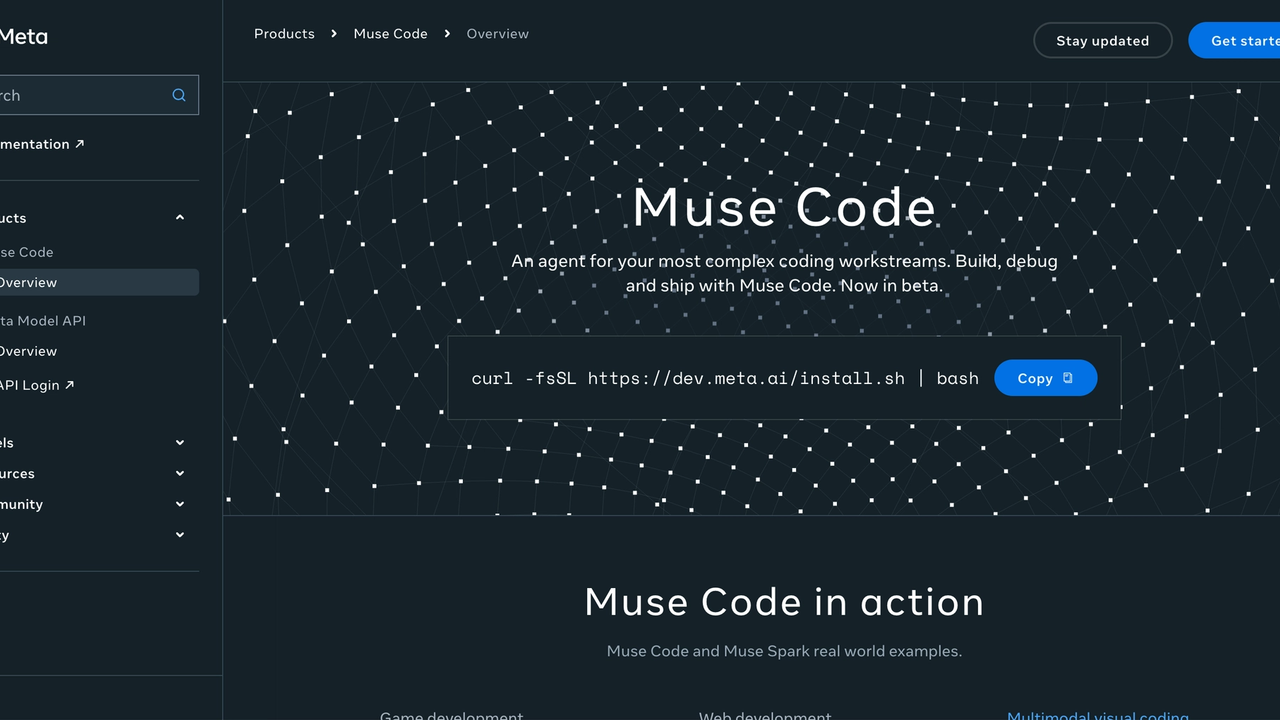
This is absolutely incredible.
Mark Zuckerberg’s Meta just released a revolutionary new AI coding agent.
The new Muse Code is so unbelievably cheap and intelligent — once again we see the clear trend of AI getting cheaper and cheaper.
And it comes with a revolutionary new approach to multi-agent collaboration, that could transform the workflow of so many developers.
Powered by their most powerful model ever — this is going to make major impact on the entire AI coding ecosystem.
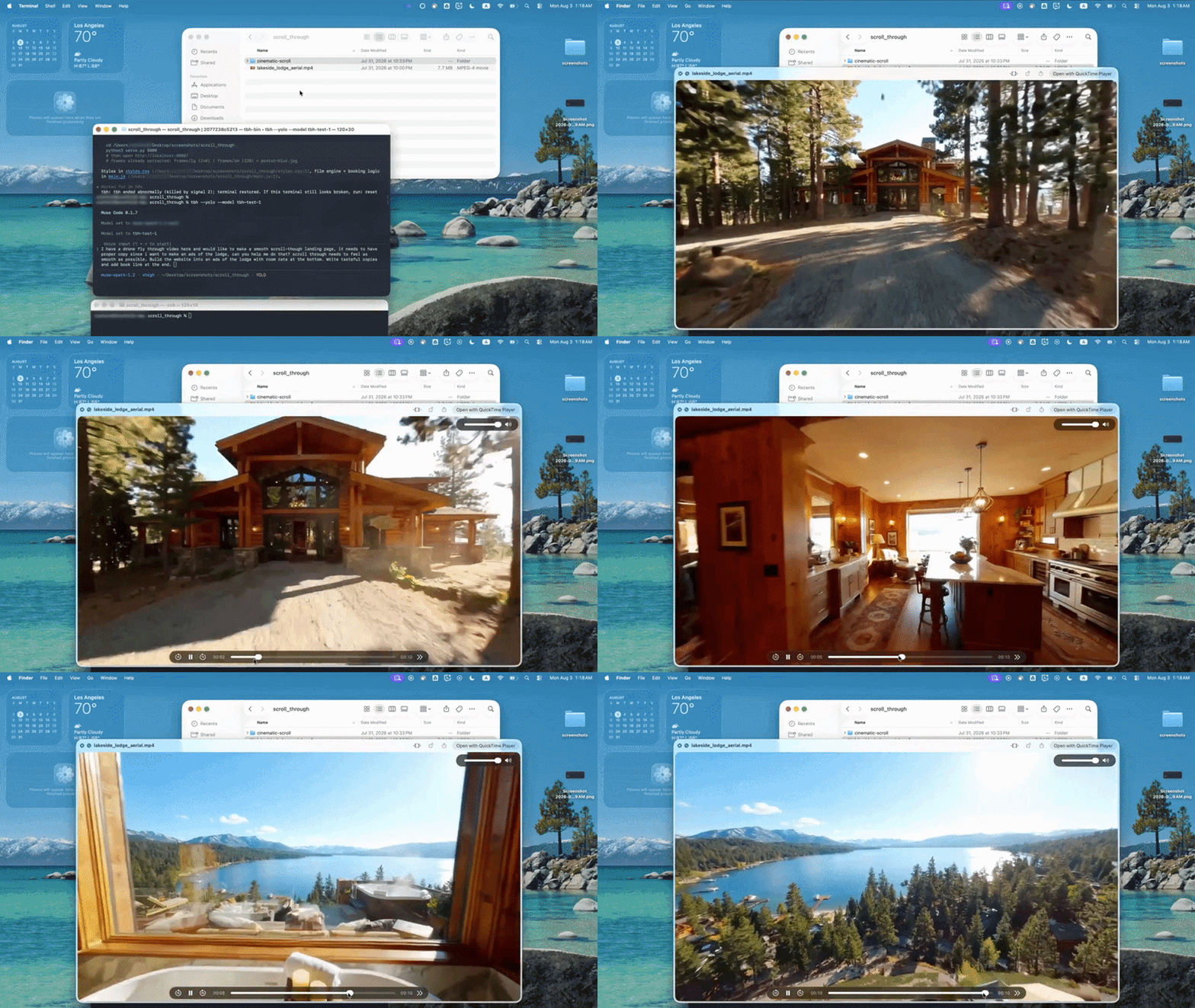
Demo stage #1: A drone fly through video to be given to Muse Code to integrate into a landing page:
Muse Code is a terminal-based agent designed from the group up to handle complete software engineering tasks across large repositories — putting it directly against tools like Claude Code and Codex.
But it’s not just yet another coding assistant in your terminal.
Meta is building it around a bigger idea: coding agents should work for hours, coordinate multiple workers, survive failures, and keep making progress autonomously.
Let’s check out all the most amazing features it comes with — including how incredibly inexpensive it is.
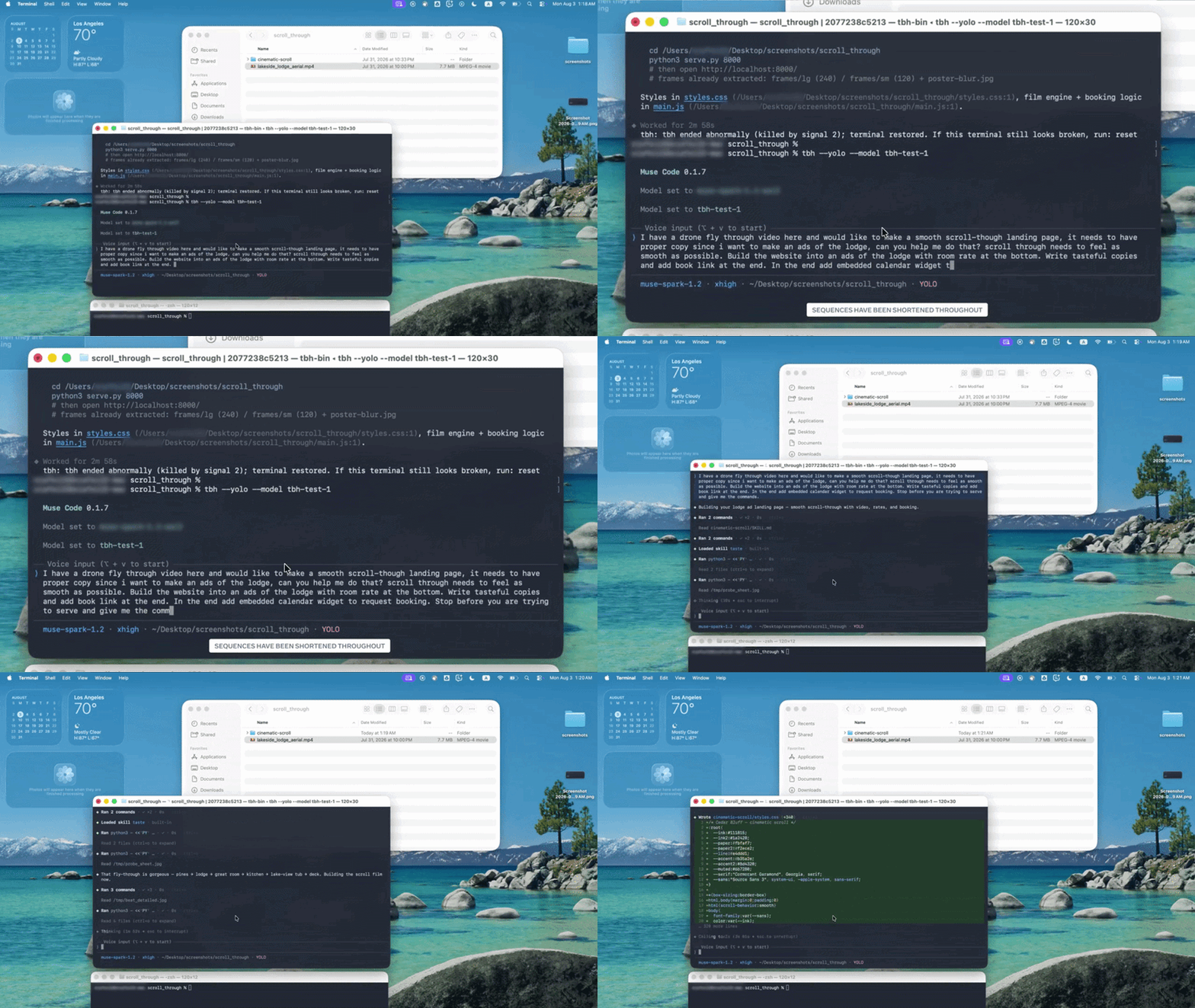
Demo stage #2: Asking Muse Code to integrate the video into the website with various marketing copies at different points in the video — directly from the terminal:
1. Persistent background agents — less repeated work
Most coding agents create a subagent, give it a task, collect the result, and destroy it.
Muse Code instead keeps asynchronous background agents alive throughout the session.
They can:
- investigate different parts of the codebase
- retain context they’ve already gathered
- work while the main agent continues
- report useful discoveries back later
For us developers, this means less repeated exploration of large repositories.
Instead of one agent repeatedly searching hundreds of files, you get specialized workers that gradually build knowledge of the project while the main agent keeps coding.
Demo stage #3: Muse Code intelligently integrates the video into the website, with all the marketing copies and the final call to action:
2. Incredible low cost — run coding agents for a fraction of the price
Meta is also being extremely aggressive on price.
Its Contributor tier can bring pricing down to as little as $0.20 per million output tokens — less than one-tenth of typical frontier-model rates.
One thing you need to know though — if you’re using this discounted tier, you have to agree to let Meta use your interactions, including generated code, to help improve its models.
If you’re comfortable with that, this could be huge for your cost savings.
Long-running agents can burn through enormous numbers of tokens. Making those tokens dramatically cheaper makes Muse Code’s hours-long autonomous coding loops and parallel agents much more practical to run regularly.
3. Muse Spark 1.2 — Meta now has a serious coding model
Muse Code is powered by Muse Spark 1.2, Meta’s new coding-focused model.
And interestingly Meta says the model and coding harness were co-trained — not something you see everyday from most other models.
Rather than wrapping an agent around a generic model afterward, Meta trained Spark using the environment and workflows it would eventually operate inside.
Some key benchmark results from Muse Spark 1.2:
- Terminal-Bench 2.1: 82.9%
- DeepSWE 1.1: 59.3%
- Meta Internal Coding Bench: 70.6%
Meta hasn’t taken the coding crown (yet??) — but it’s clearly become a serious competitor.
4. Parallel worktrees — build multiple things at once
Muse Code can also fan large tasks out across multiple subagents running simultaneously in isolated Git worktrees.
Each agent gets its own workspace, allowing several agents to modify the same repository without constantly overwriting each other’s work.
Meta demonstrated this by having Muse Code build six game features simultaneously without collisions.
The practical benefit is speed.
Instead of:
feature A → feature B → feature C → feature D
you potentially get:
feature A + feature B + feature C + feature D
all being developed simultaneously.
AI coding starts looking less like one extremely fast developer and more like a small engineering team working in parallel.
5. Crash recovery — long-running agents don’t lose everything
Long-running agents create another problem: failure becomes increasingly expensive.
Imagine an agent researching, coding, testing, and debugging for three hours — then the process crashes.
Muse Code addresses this with a local append-only event log.
Model calls, tool executions, approvals, edits, and other actions are recorded as events. The runtime can replay them to reconstruct its previous state.
That makes executions restart-safe.
For five-minute coding prompts, this isn’t particularly important.
For autonomous tasks lasting several hours, it’s essential.
6. 24-hour coding runs — AI coding becomes a background process
Meta is clearly designing Muse Code for much longer tasks than normal prompt-and-response coding.
In one experiment, Muse Code optimized GPU kernels for NVIDIA Hopper hardware.
The agent repeatedly:
wrote code → compiled → profiled → analyzed → improved
It made more than 1,000 tool calls across runs lasting up to 24 hours.
That’s a very different model of AI-assisted development.
For optimization, migrations, debugging, test improvement, and other measurable engineering problems, you could define the goal, leave the agent running, and return later to the results.
What all this tells us
The most interesting part of Muse Code isn’t another benchmark score.
It’s everything surrounding the model:
Persistent agents. Parallel worktrees. Crash recovery. Thousands of tool calls. 24-hour autonomous runs.
The AI coding race is moving beyond “which model writes the best code?”
It’s increasingly about which system can reliably keep working until the engineering task is actually finished.
Muse Code is Meta’s answer.