This Claude command saves you from so many painful bugs
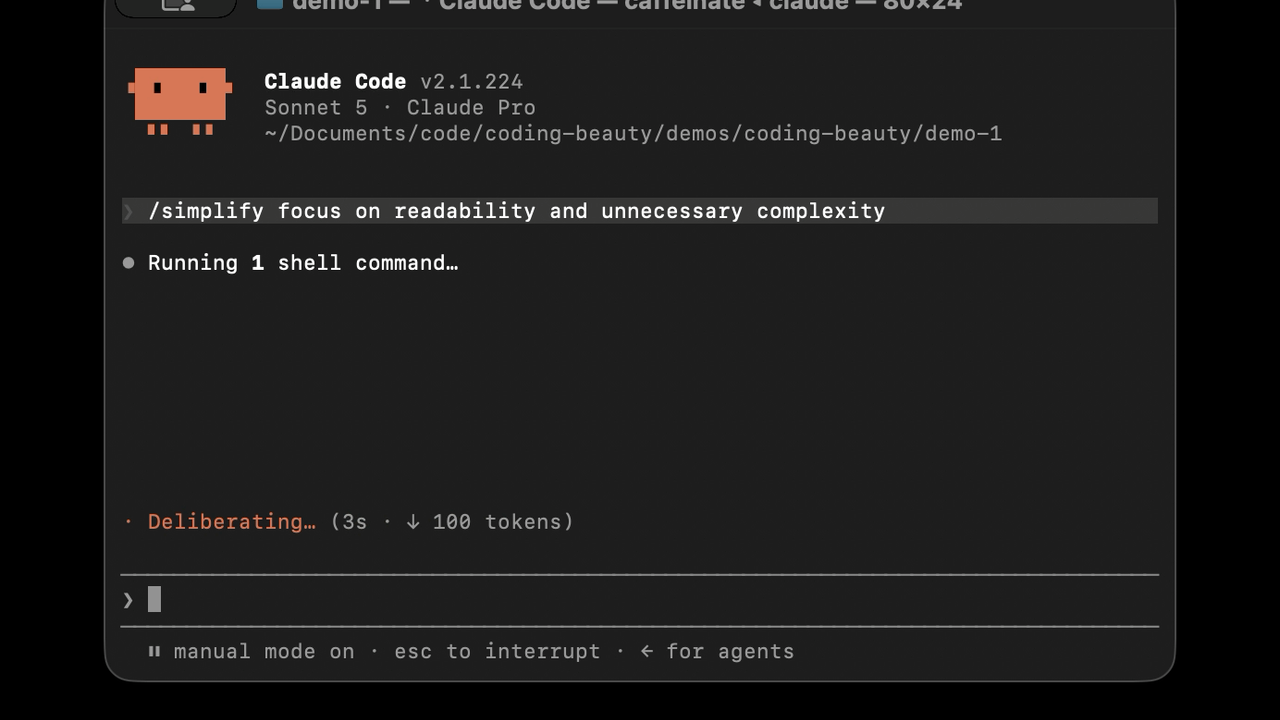
This Claude Code command will save you from so many painful bugs.
Yes we already know how good Claude Code is at making code work…
But what happens after several prompts, fixes, and changes of direction?
Your working code quietly accumulates duplicated logic, unnecessary abstractions, inefficient operations, and remnants of abandoned approaches.
And this is why the /simplify Claude Code command is so important.
With /simplify, Claude will rapidly review your recent changes, finds opportunities to make them simpler and more efficient, and applies the improvements automatically.
The code becomes easier for both you and your agent to understand — which dramatically reduces the odds of a buggy change being made in the future.
1. Parallel agents attack your code from different angles
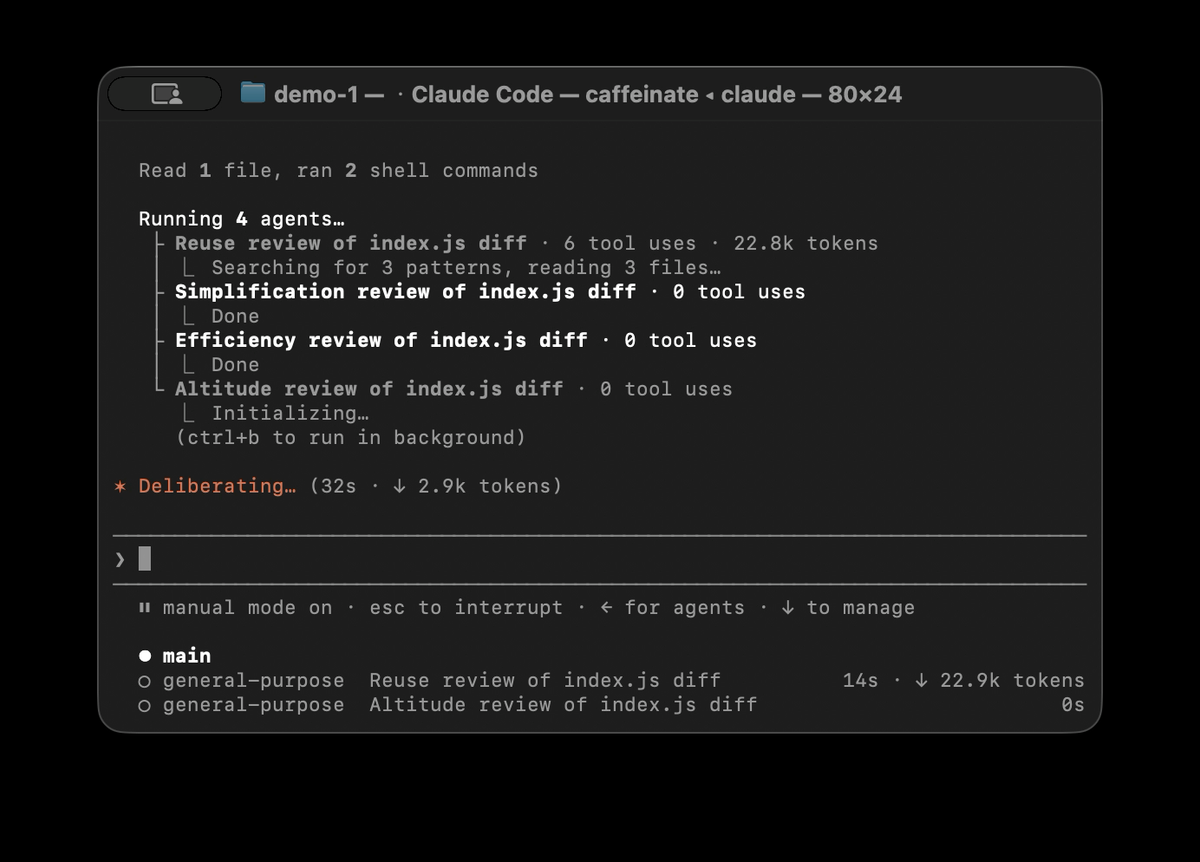
This is one thing that really sets it apart — from just asking Claude to simplify your code.
When you trigger /simplify, Claude doesn't just run a one-shot cleanup prompt.
It spawns multiple parallel review agents on the fly — at least three — each examining recently modified code from a different angle:
- Code reuse and duplication: Finds duplicated logic, redundant abstractions, and opportunities to reuse existing code.
- Quality and readability: Looks for unnecessary complexity, deeply nested conditionals, convoluted expressions, poor naming, and code that could be clearer.
- Efficiency and footprint: Searches for unnecessary work, dead code, redundant helpers, and potential memory or performance improvements.
Claude combines their findings and applies the resulting improvements.
You’re essentially getting specialized code-review team dedicated entirely to cleaning up what was just built.
2. Specifically designed to fight AI-generated code bloat
AI agents can produce messy code even when the final result works perfectly.
Claude creates an implementation. You change a requirement. Claude modifies it. A test fails. Claude patches it. Another edge case appears. Claude patches that too.
Eventually, layers of individually reasonable changes can stop forming the simplest overall solution.
That's why /simplify is distinct from a traditional bug-focused review. Its focus is cleanup: reuse, simplification, efficiency, and overall implementation quality.
The question isn't necessarily:
"Does this code work?"
It's:
"Now that it works, is this still the code we actually want?"
3. It looks for code Claude should have reused
One of /simplify's explicit review dimensions is reuse.
That's especially important as codebases grow.
An AI agent can generate a perfectly reasonable solution — without realizing that somewhere else in the repository there's already a helper, utility, abstraction, or established pattern that solves essentially the same problem.
The new code isn't necessarily bad.
It's simply unnecessary.
And unnecessary code means more maintenance, more opportunities for implementations to diverge, and more context future AI agents have to understand.
/simplify gives Claude another chance to understand the broader repository and consolidate code instead of continuously adding more.
4. It doesn't just review your code
This is an important difference between /simplify and conventional AI code review.
It doesn't simply produce a report.
After reviewing the changed code, Claude applies the fixes it discovers.
That makes /simplify closer to an automated refactoring stage than a traditional reviewer.
Anthropic even separates these responsibilities into three separate commands:
/diff
/simplify
/review
/diff shows what changed.
/simplify improves the implementation.
/review performs deeper read-only analysis.
Instead of leaving developers with another list of suggestions to manually implement, Claude can clean up its own work before the final review.
5. It follows your project's rules — not just generic "clean code"
/simplify isn't limited to Claude's general idea of what good code should look like.
Its review can also account for your CLAUDE.md, Claude Code's persistent project instruction file.
That file can define architectural rules, coding conventions, preferred libraries, constraints, and other repository-specific instructions.
So simplification can remain grounded in how your particular codebase is supposed to work.
A refactoring might look cleaner in isolation while violating an architectural rule you've established for the project.
/simplify can account for both.
So the question becomes more than:
"Can I make this code cleaner?"
It's also:
"Can I make it cleaner while keeping it consistent with the rest of this project?"
As AI agents write increasingly large portions of software, generating more code isn't necessarily the difficult part anymore.
Keeping all that generated code coherent might be.